Payments
How to Set Up a Decentralized Cloud VM with Aleph CLI
Deploy a decentralized VM in 10 minutes with Aleph Cloud's Rust CLI. Install, fund with USDC/ALEPH, launch Ubuntu instances for ~$10/month, and SSH in. No Python, no centralized cloud.
3 min. read -
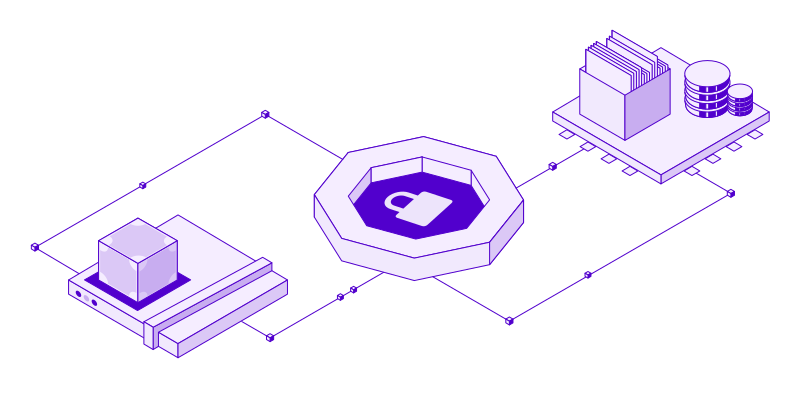
Table of contents
Aleph Client
Aleph virtual machines
Pyaleph
A new cycle is coming
The Aleph Cloud ecosystem is gearing up for its most significant release cycle yet, with three new major updates that will transform how developers and enterprises use decentralized cloud computing. These aren’t just incremental improvements, they represent a fundamental leap forward in performance, security, and usability.
Three major software updates are now live on Aleph Cloud that make everything faster, more secure, and easier to use.
What’s getting upgraded:
**Why it matters: **Applications will run faster, handle AI workloads better, offer stronger privacy protection, and provide a more reliable experience overall.
Aleph-client 1.7.0: supercharging developer experience
This update to Aleph’s Python client library is all about making developers’ lives easier. The focus is on seamless multi-blockchain integration and streamlined APIs that reduce complexity without sacrificing power.
Aleph Cloud consistently delivers updates that eliminate developer friction while expanding platform capabilities.
What this means: Building decentralized applications becomes as straightforward as traditional cloud development, but with all the benefits of decentralization.
Aleph-vm 1.8.0: Enterprise-grade virtual machine power
This new version transforms Aleph Cloud virtual machines into a true enterprise-grade virtualization platform. The headline features revolve around advanced GPU management and confidential computing capabilities that rival traditional cloud providers.
The GPU reservation system gets a major overhaul with intelligent compatibility detection and resource allocation. Meanwhile, confidential computing support expands significantly, particularly for AMD SEV/SEV-SNP processors, making it ideal for sensitive workloads that require hardware-level security guarantees.
Performance optimizations touch every aspect of the system, from faster VM boot times to more efficient memory usage and enhanced network diagnostics. The result is a platform ready for demanding AI/ML workloads and high-performance computing tasks.
What this means: Organizations can now run their most demanding and sensitive workloads on Aleph Cloud with confidence, knowing they have enterprise-level performance and security.
Pyaleph 0.9.0: The network that just works
Already available as a Docker image, Pyaleph 0.9.0 represents the most significant upgrade to Aleph’s core network infrastructure. This is the software that makes everything else possible, handling message processing, data storage, and the peer-to-peer communication that keeps the network running smoothly.
The major breakthrough is dramatically improved message processing with better validation and faster throughput. Network optimization includes smarter peer discovery and synchronization algorithms that make the entire network more resilient and responsive.
Database performance gets a substantial boost through optimized PostgreSQL operations and better indexing strategies. The migration to Pydantic V2 provides both better data validation and improved performance across the board.
What this means: The entire Aleph network becomes more reliable, faster, and better equipped to handle growing demand as more applications and users join the ecosystem.
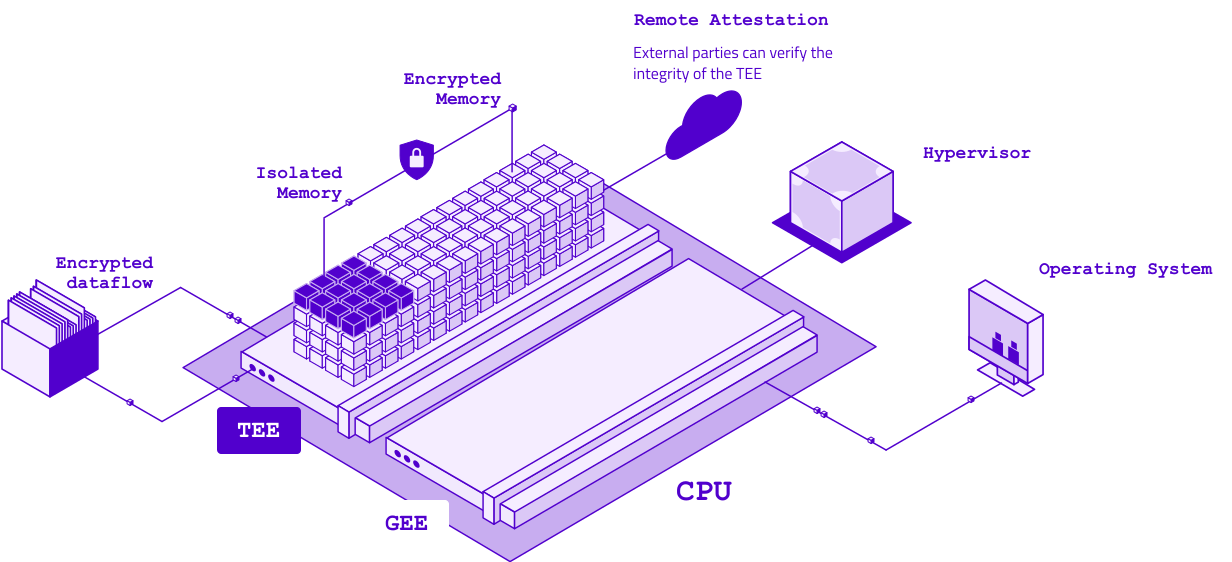
Deploy your own confidential VM
Follow our guide to set up secure, AMD SEV-powered Confidential Virtual Machines and protect your data.
Why this release cycle matters?
These coordinated updates signal Aleph Cloud’s evolution into a platform that can genuinely compete with traditional centralized cloud providers while maintaining the crucial advantages of decentralization.
The strategic timing is no accident. With enterprises increasingly concerned about data sovereignty, vendor lock-in, and censorship resistance, Aleph Cloud is positioning itself as a solid alternative to centralized providers. These releases provide the performance benchmarks and enterprise features that decision-makers demand.
For developers, the improved tooling and APIs remove the traditional friction associated with decentralized platforms. For enterprises, the enhanced security and performance capabilities make Aleph Cloud a viable option for mission-critical workloads. For the broader ecosystem, these improvements lay the groundwork for the next wave of decentralized applications and services.
These releases set the foundation for a bigger update coming next year.
Payments
Deploy a decentralized VM in 10 minutes with Aleph Cloud's Rust CLI. Install, fund with USDC/ALEPH, launch Ubuntu instances for ~$10/month, and SSH in. No Python, no centralized cloud.
Computing
Aleph tokenomics introduces a dual-stream rewards model for decentralized cloud operators: a transitional reward floor plus a usage-based revenue share.
Payments
Pay As You Go and Holder Tier payments are officially deprecated. Aleph Cloud now runs on a single credit system. Top up with USDC, fiat, or ALEPH and pay for what you use.
Virtual Machines
Explore how OpenClaw AI agents, and Aleph Cloud’s decentralized AI Supercloud are redefining autonomous computing with sovereign, censorship-resistant infrastructure.